What is the Difference between Sound Healing and Sound Therapy?
Sound has been an essential part of human culture and wellness for thousands of years. From ancient chants, mantras, and ceremonial instruments to modern clinical applications, sound has long been used to influence emotions, calm the nervous system, and support overall well-being.
Today, two practices often discussed together—but frequently misunderstood—are sound healing and sound therapy. While both harness the power of sound and vibration, they differ significantly in intention, methodology, training, and application.
This article explores the key differences between sound healing and sound therapy, including their origins, techniques, benefits, and modern uses. Understanding these distinctions can help you choose the approach that best aligns with your personal goals—whether spiritual growth, emotional balance, stress relief, or clinical support.
What Is Sound Healing?
Sound healing is an ancient, holistic practice that uses vibration, tone, and frequency to support physical, emotional, energetic, and spiritual well-being. It is based on the understanding that everything in the universe—including the human body—is in a constant state of vibration.
From a sound healing perspective, discomfort or illness arises when the body’s natural vibrational harmony is disrupted. Sound healing works by introducing resonant frequencies that help restore balance, clear energetic blockages, and harmonize the body’s energy systems.
Rather than treating isolated symptoms, sound healing focuses on the whole person, addressing the interconnected relationship between body, mind, emotions, and spirit.
Techniques Used in Sound Healing
Sound healing sessions often combine intention, presence, and vibrational instruments. Common tools and techniques include:
- Singing Bowls
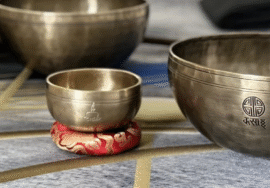
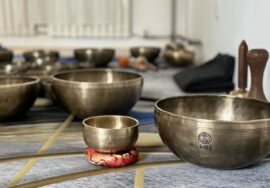
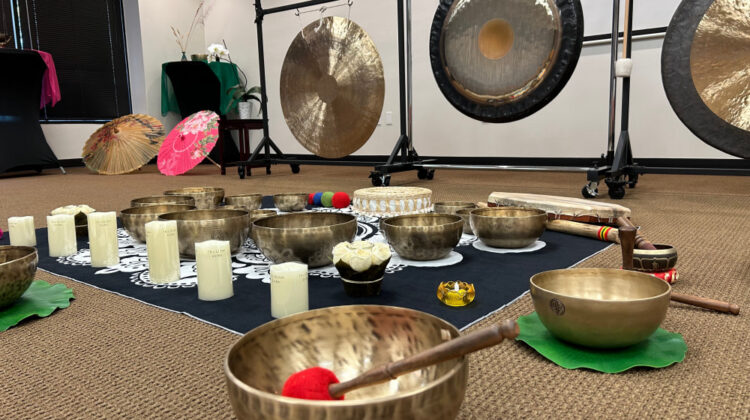
Tibetan metal bowls and crystal bowls produce rich, sustained tones that resonate with the body’s energy centers (chakras). Among them, Full Moon Singing Bowls are especially valued for their depth, purity, and energetic potency. - Gongs
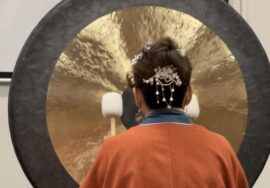
Gongs create powerful, immersive sound waves that penetrate deeply into the body, helping release tension and induce expanded meditative states. - Tuning Forks
These produce precise frequencies applied to the body or energy field to promote energetic alignment. - Drums and Rattles
Rhythmic drumming helps synchronize brainwaves, guiding the nervous system into deep relaxation or trance-like states. - Vocal Toning and Mantras
Chanting, humming, and sacred sounds—such as “Om”—use the human voice as a healing instrument, fostering resonance and inner alignment.
Benefits of Sound Healing
Sound healing is widely valued for its emotional and spiritual benefits, including:
- Deep relaxation and stress reduction
- Balancing chakras and restoring energetic flow
- Emotional release and inner calm
- Enhanced spiritual awareness and clarity
- Improved sleep quality
- A sense of connection, grounding, and wholeness
Many people experience sound healing as a meditative, nurturing, and transformative experience rather than a medical intervention.
Cultural and Historical Roots of Sound Healing
Sound healing traditions are found across civilizations:
- Tibetan Singing Bowls were used by monks for meditation and ceremonial healing, with vibrations believed to harmonize mind and body.
- Vedic Mantras from ancient India used sacred sound to elevate consciousness and connect with universal energy.
- Shamanic Drumming in indigenous cultures supported healing, journeying, and spiritual communication.
- Gongs in Asia symbolized purification, transformation, and energetic clearing.
- Ancient Greek Philosophy, particularly Pythagoras, explored musical frequencies as medicine, giving rise to the idea of “musical healing.”
What Is Sound Therapy?
Sound therapy is a clinical, structured, and evidence-based approach that uses sound and music to support physical, emotional, and mental health. Unlike sound healing, sound therapy is grounded in scientific research, neuroscience, and psychology.
Sound therapy focuses on how sound waves affect:
- Brainwave activity
- Nervous system regulation
- Pain perception
- Emotional processing
It is typically administered by trained and certified professionals and is often integrated into healthcare, rehabilitation, and mental health settings.
Techniques Used in Sound Therapy
Common sound therapy methods include:
- Vibroacoustic Therapy (VAT)
Low-frequency sound vibrations delivered through specialized chairs or tables to reduce pain, relax muscles, and calm the nervous system. - Guided Imagery with Music (GIM)
A psychotherapeutic approach using carefully selected music to support emotional processing and subconscious exploration. - Binaural Beats
Slightly different frequencies played in each ear encourage specific brainwave states related to relaxation, focus, or sleep. - Music Therapy
A structured therapeutic practice involving listening, singing, or creating music to address emotional and neurological conditions. - White Noise and Nature Sounds
Used to improve sleep, concentration, and manage conditions like tinnitus.
Benefits of Sound Therapy
Sound therapy offers measurable, research-supported benefits, including:
- Reduced anxiety, depression, PTSD, and stress
- Pain management and muscle relaxation
- Improved focus, memory, and cognitive performance
- Better sleep and nervous system regulation
- Support for neurological recovery and emotional expression
Because of its clinical framework, sound therapy is often goal-oriented and outcome-driven.
Sound Healing vs. Sound Therapy: Key Differences
Intent and Purpose
- Sound Healing focuses on energetic balance, emotional harmony, and spiritual well-being. It is holistic, intuitive, and rooted in ancient traditions.
- Sound Therapy targets specific physical or psychological conditions using structured, evidence-based methods.
Tools and Settings
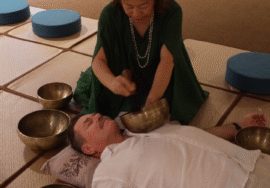
- Sound Healing uses singing bowls, gongs, tuning forks, drums, and voice, often in meditation spaces, sound baths, or holistic centers.
- Sound Therapy uses clinical equipment, music-based interventions, and guided recordings in medical or therapeutic environments.
Scientific Foundation
- Sound Healing is primarily tradition-based, supported by experiential and anecdotal evidence.
- Sound Therapy is supported by neuroscience, psychology, and clinical research, making it suitable for modern healthcare settings.
Practitioner Training
- Sound Healing practitioners may train through mentorship, workshops, and personal practice.
- Sound Therapy practitioners undergo formal education and certification, often holding degrees in music therapy or related health fields.
Where Sound Healing and Sound Therapy Overlap
Despite their differences, both practices share important foundations:
- Sound and vibration influence the nervous system
- Frequencies can alter brainwave states
- The mind-body connection is central to healing
- Sound affects physical, emotional, mental, and energetic levels
When integrated thoughtfully, sound healing and sound therapy can complement one another, blending ancient wisdom with modern science.
How to Choose the Right Approach
Consider the following when deciding:
- Choose sound healing if you seek spiritual connection, emotional balance, relaxation, or energetic alignment.
- Choose sound therapy if you want support for specific health conditions, mental health challenges, or neurological recovery.
Many individuals benefit from integrating both, creating a personalized and holistic wellness journey.
Conclusion
Sound healing and sound therapy each offer powerful pathways to well-being. One draws from ancient traditions and energetic wisdom; the other from modern science and clinical research. Whether used independently or together, sound remains a profound tool for restoring balance, harmony, and vitality—reminding us that healing is not only something we do, but something we resonate with.