How Sound Travels Through the Body: An Experiential Perspective
Sound is more than something we hear—it is something we feel. Every vibration, every tone, every resonance interacts with the body long before it reaches the ears. Understanding how sound travels through the body helps explain why sound work, like Kasa Full Moon Bowls, can be so immersive, grounding, and deeply felt.
1. Sound as Vibration
At its core, sound is vibration moving through matter. In the air, we perceive it as audible tones. But when sound comes into contact with the body, it interacts with a much more complex system. Bones, muscles, fascia, fluids, and organs all carry vibrations differently. The body is not hollow—it is conductive and responsive, and it receives sound in ways that are both subtle and profound.
2. Multiple Pathways of Transmission
Sound reaches the body through several channels at once:
- Airborne conduction: The sound waves travel through the air, entering the ears and vibrating the eardrum. From there, they stimulate the auditory system and the brain.
- Bone conduction: Vibrations bypass the ear canal and travel directly through bones, especially the skull and ribcage. This pathway allows sound to be felt in the chest, spine, and head simultaneously.
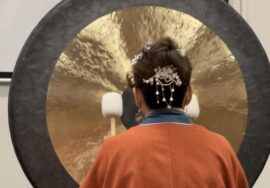
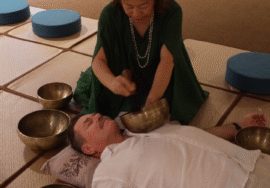
- Tissue conduction: Fascia, muscles, and fluids transmit vibrations internally. This is why deep sounds from metal bowls or gongs can be felt in the stomach, back, or even the soles of the feet.
These pathways work together to create a whole-body experience, where the listener is simultaneously hearing, sensing, and being enveloped by the sound.
3. Resonance and the Body’s Natural Frequencies
Every part of the body has its own natural frequency. When sound enters the body, it can entrain or resonate with these tissues. This is not a “correction” or external imposition—it is a gentle invitation. For example, low-frequency tones from Kasa Full Moon Bowls can create vibrations that travel through bones and fluids, encouraging the body to notice, soften, and align with the rhythm. High-frequency harmonics are carried more through air and surface tissue, offering a lighter, shimmering sensation.
4. Nervous System Response
The body perceives sound not only physically but also through the nervous system. Vibrations interact with the vagus nerve, sensory receptors, and proprioceptive feedback, influencing breath, muscle tone, and the overall sense of safety. Slowly decaying, layered tones—like those from high-purity seven-metal Kasa bowls—allow the nervous system time to follow the vibration, relax, and settle naturally. The body responds before thought, which is why sound can be immediately grounding or calming.
5. The Immersive Field
When sound fills a space, it creates an immersive environment. The body is not separate from the sound—it exists within it. The vibrations move around and through the listener, through the floor, through the air, and through the room. In this way, the experience is full-bodied, multi-sensory, and relational. The listener does not need to do anything to receive it; the body naturally aligns with the resonance over time.
6. Why Instrument Choice Matters
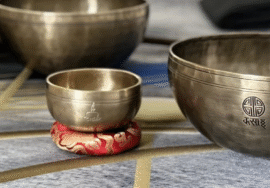
Not all instruments produce the same pathways or quality of vibration. Crystal bowls produce clear, bright tones that move quickly through air and surface tissue. Tuning forks are precise but localized. Ultimate Kasa Full Moon Bowls, crafted from a seven-metal high-purity alloy, generate complex, layered harmonics that move slowly through both air and tissue, allowing the body to fully absorb the energy of sound without being startled or forced.
In essence, sound travels through the body as vibration, resonance, and relational energy, moving along multiple pathways simultaneously. The experience is immersive: the body does not merely hear the sound, it feels, receives, and integrates it on a physiological and sensory level. This is why properly crafted instruments, played with intention and presence, can create such a profound full-body experience.