Why Nervous System Reset Is Crucial in Modern Life
Modern life moves faster than the human nervous system was designed to handle.
Constant notifications, long working hours, emotional pressure, artificial lighting, noise, and ongoing uncertainty keep the body in a near-continuous state of alert. Even when we rest physically, the nervous system often remains switched on—scanning, bracing, and reacting.
Over time, this creates chronic dysregulation.
A nervous system that does not reset properly struggles to shift out of survival mode. This affects not only mental health, but digestion, sleep, immunity, focus, emotional regulation, and the body’s ability to recover from stress.
The Nervous System and Survival Mode
The nervous system’s primary role is protection. When it senses threat—whether physical, emotional, or environmental—it activates survival responses such as fight, flight, or freeze.
In modern life, these responses are triggered not by immediate danger, but by:
- constant mental stimulation
- time pressure
- social and work demands
- emotional overload
- lack of true rest
When the nervous system is repeatedly activated without adequate recovery, it stops returning fully to baseline. Stress becomes the default state rather than a temporary response.
This is why many people experience:
- persistent fatigue even after rest
- difficulty sleeping or relaxing
- anxiety or emotional reactivity
- tension held in the body
- feeling disconnected or “on edge”
A nervous system reset is not about forcing calm. It is about restoring the body’s ability to move naturally between activation and rest.
Reset vs. Relaxation
Relaxation is a temporary state.
A nervous system reset is a functional shift.
Relaxation may slow the body down for a short period, but if the nervous system has not learned safety, it will quickly return to stress patterns when life resumes.
A reset focuses on:
- re-establishing rhythm
- restoring balance between activation and rest
- supporting the nervous system’s capacity to self-regulate
In busy modern life, this capacity is often lost—not because people are weak, but because the environment rarely allows true regulation.
Why the Body Needs Help Resetting Today
Historically, stress responses were followed by completion: movement, rest, social connection, or sleep. Modern stress rarely resolves in this way.
Instead, the body accumulates unfinished stress responses.
The nervous system needs clear signals of safety to reset, including:
- slow, predictable rhythm
- grounded sensory input
- absence of demand
- relational presence
- time and space to settle
Without these signals, the body remains vigilant—even during rest.
Why Meta Ye Sound Wellness Center Focuses on Nervous System Reset
At Meta Ye Sound Wellness Center, the focus is not on escape, stimulation, or performance-based experiences. The work is centered on helping the nervous system return to balance in a grounded, embodied way.
Sound is used not as entertainment or distraction, but as a regulatory input.
Sound as a Nervous System Language
The nervous system responds to vibration, rhythm, and sensation before it responds to thought.
Sound, when applied intentionally, can:
- support parasympathetic activation
- provide predictable rhythm
- create a felt sense of safety
- invite the body to soften without collapse
This makes sound a powerful tool for nervous system reset when used with precision and care.
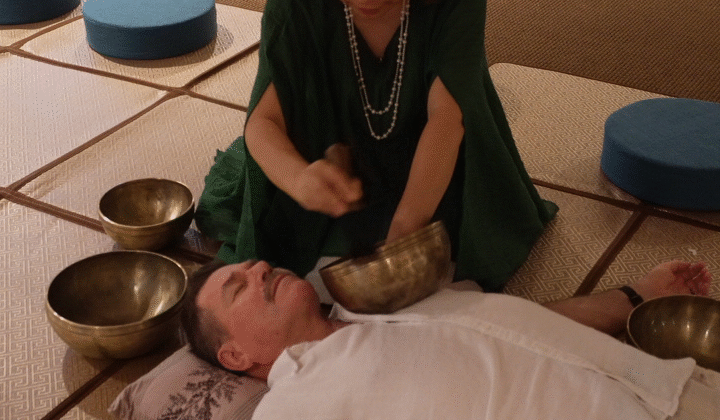
Why Meta Ye Uses Kasa Full Moon Singing Bowls
Meta Ye Sound Wellness Center works exclusively with Kasa full moon singing bowls because of how they interact with the nervous system.
These bowls produce:
- dense, physical vibration that is felt through the body
- organic overtones with natural variation
- grounding resonance rather than sharp stimulation
This type of sound supports regulation rather than dissociation. It encourages presence rather than altered states.
Rather than overwhelming the senses, Kasa bowls allow the nervous system to orient, settle, and recalibrate at its own pace.
Rhythm, Not Overstimulation
A regulated nervous system thrives on rhythm and predictability.
Meta Ye sessions emphasize:
- slow pacing
- repetition
- spaciousness and silence
- gradual transitions
This mirrors the conditions under which the nervous system naturally resets. There is no pressure to release emotions, visualize, or achieve a particular experience.
Presence and Attunement
Nervous system reset happens in relationship.
At Meta Ye, sessions are guided by listening—responding to breath, posture, and subtle cues from the body. The practitioner remains grounded and regulated, creating an environment of co-regulation and safety.
Sound becomes a dialogue with the nervous system rather than an imposed experience.
Supporting Regulation in a Demanding World
In a busy modern environment, many people do not need more stimulation—they need space for the nervous system to recover.
Meta Ye Sound Wellness Center exists to provide that space: a place where the body can slow down without shutting down, where calm does not require effort, and where regulation is supported rather than forced.
Sound is used as a steady, embodied reminder to the nervous system that it is safe to rest, reorganize, and return to balance.