Beyond Sound Equipment: Why the Instrument Is Only Half the Remedy
People often ask which sound tool is “better.”
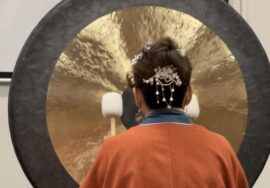
Crystal bowls. Tuning forks. Gongs. Kasa bowls.
The question itself misses something essential.
Sound work is not only about equipment.
It is about relationship.
Not just the relationship between a person and a sound—but the living relationship among the practitioner, the instrument, and the client within a shared environment. Sound becomes the medium that reveals that relationship.
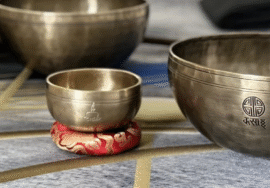
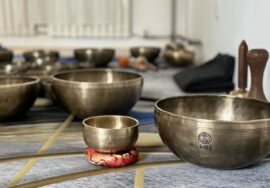
Every instrument carries a behavior. Crystal bowls tend to project. They fill space quickly and dominate the sonic field. Tuning forks direct. They deliver precise vibrations to specific points in the body. Kasa Full Moon Bowls, however, converse. They respond to touch, pressure, pacing, breath, and silence. They require the practitioner to listen as much as play.
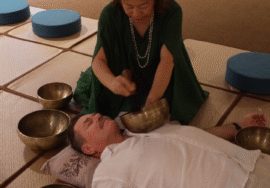
With Kasa bowls, sound does not come from the instrument alone. It emerges between the hands, the metal, the room, and the body receiving it. This places the practitioner inside the field of sound, not above it. The role is not to control, but to participate.
Kasa bowls cannot be rushed. If they are struck too hard, they resist. If they are moved too quickly, the sound collapses. They demand restraint, timing, and sensitivity. Over time, the practitioner’s own nervous system must settle and refine in order to work with them skillfully. The bowls do not compensate for agitation, distraction, or force.
This matters more than people realize.
Sound work is fundamentally co-regulation. The practitioner’s internal state is carried within the sound itself. The room—its acoustics, stillness, and emotional tone—becomes part of the experience. When tools emphasize precision alone, this relational field can be bypassed. When tools emphasize immersion, integrity becomes unavoidable.
In my work, the instrument does not override the client’s system. It responds to it. The pace of the session adjusts to the breath in the room. The resonance shifts based on what the body is ready to receive. Change unfolds not because the “right frequency” was applied, but because the environment felt safe enough for the system to soften.
I chose Kasa Full Moon Bowls not because they are superior objects, but because they hold me accountable to presence. They do not allow shortcuts. They reflect the state of the practitioner, the sensitivity of the client, and the coherence of the space itself.
Transformation does not come from the loudest sound, the highest frequency, or the most expensive instrument. It comes from resonance—between practitioner, instrument, environment, and body.
That is what these bowls support.
And that is why I use them.