How Sound Creates a Sense of Safety
Safety is the foundation of any meaningful experience in the body. Without it, the nervous system cannot relax, the mind cannot focus, and the body cannot soften. Sound—when delivered intentionally—has a unique ability to signal safety and support through vibration, resonance, and presence.
1. The Nervous System Responds to Sound
The human nervous system constantly scans the environment for cues of threat or safety. Sound is one of the most immediate and powerful signals. Slow, continuous, and harmonious vibrations—like those from Ultimate Kasa Full Moon Bowls—can activate the parasympathetic nervous system, the branch responsible for rest, digestion, and recovery. When the nervous system perceives predictability and coherence in sound, it interprets the environment as safe enough to let go of vigilance.
In contrast, abrupt, loud, or high-pitched sounds trigger alertness, tightening muscles, and increased heart rate. Sound has a direct effect on the body’s “alarm system,” making the quality of vibration crucial in creating safety.
2. Continuity and Resonance Build Trust
Sound that is layered, long-decaying, and enveloping—as Kasa Full Moon Bowls produce—creates a continuous field around the body. This continuity gives the nervous system time to follow the vibration, breathe, and relax. It is not just about hearing; it is about feeling sound move through tissues, fluids, and bones, signaling a coherent, stable environment.
The sense of safety emerges from this consistency. When the body senses that nothing abrupt will happen, it can drop out of hyper-vigilance and enter a state of receptivity.
3. Sound as a Container
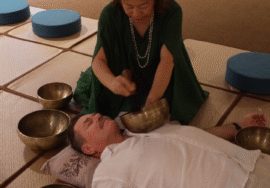
Sound acts as a container for the body and attention. In a session with carefully crafted tones, the listener does not need to monitor, plan, or control anything. The vibrations occupy space, creating boundaries that feel supportive rather than restrictive. The body experiences that it is held, surrounded, and invited to soften.
This container is relational: it reflects the state of the practitioner, the instrument, the environment, and the listener simultaneously. When the practitioner is present, the instrument resonates fully, and the environment is calm, the listener perceives safety both physically and subconsciously.
4. Invitation, Not Direction
Unlike precise instruments that demand focus or correction—like tuning forks—Kasa Full Moon Bowls invite the body to respond naturally. There is no expectation of doing anything “right.” This non-demanding quality signals to the nervous system that it is safe to explore, breathe, and settle. The body can soften in its own time, rather than comply with external instructions.
5. Embodied Awareness and Safety
Finally, sound encourages embodied awareness. As vibration moves through the body, attention naturally shifts inward: breath, subtle movement, and resonance become felt. This inward focus is grounding and restorative. The body learns, in real time, that it can exist fully in the present without threat. Over repeated experiences, sound can train the nervous system to recognize and hold safety more readily.
In short, sound creates a sense of safety through slow, layered vibration, continuous resonance, and relational presence. It is not just heard—it is felt, embodied, and integrated, signaling to the nervous system that it can release tension, soften, and simply exist.