Is sound healing backed by neuroscience?
Yes—while sound healing is still considered a complementary or emerging practice, there is growing neuroscientific evidence that sound and vibration can influence the brain, nervous system, and body in measurable ways. It’s important to understand what is supported and what is still anecdotal.
1. Nervous System Effects
- Parasympathetic activation: Resonant, harmonic sounds can lower heart rate, slow breathing, and reduce cortisol, shifting the body out of “fight or flight.”
- Co-regulation: Presence of live sound alongside a calm practitioner can enhance vagal tone, which supports stress resilience.
Neuroscience relevance: These physiological shifts are measurable via heart rate variability (HRV), skin conductance, and hormone levels.
2. Brainwave Entrainment
- Studies show rhythmic auditory stimuli can entrain brainwaves, encouraging alpha and theta states associated with relaxation, creativity, and restorative sleep.
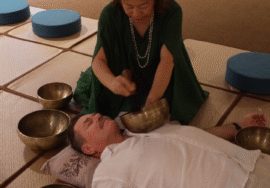
- Singing bowls, gongs, and chimes produce overtones and vibrations that facilitate these slower brainwave states.
Neuroscience relevance: EEG recordings demonstrate changes in brainwave patterns during sound therapy sessions.
3. Emotional and Cognitive Effects
- Music and harmonic tones activate the limbic system, which governs emotion, memory, and reward.
- Sound therapy can reduce amygdala hyperactivity (associated with anxiety) and increase activity in areas linked to emotional regulation.
Neuroscience relevance: Functional MRI and neuroimaging studies support these changes in response to carefully structured auditory stimuli.
4. Somatic and Vibrational Impact
- Vibrations from instruments are felt through the body, stimulating mechanoreceptors in fascia, skin, and muscles.
- This contributes to relaxation, tension release, and a sense of grounding.
Neuroscience relevance: Research on somatosensory input shows vibration can reduce stress perception and improve parasympathetic responses.
5. Caveats
- Most studies focus on general stress reduction, relaxation, and meditation support, rather than claims of curing disease.
- Evidence is stronger for live, immersive sound than for recordings or digitally generated tones.
- Clinical adoption is still emerging, but the physiological and neurological effects are measurable and reproducible.
Summary
Sound healing is supported by neuroscience in that harmonic sounds and vibration can calm the nervous system, shift brainwaves, and reduce stress—even if it is not a medical treatment or cure.