Why Crystal Bowls Dominate Sound Healing in the United States
Since the 1980s, research and practice in natural therapies and sound-based healing have steadily expanded in the United States. However, within the field of sound bowl therapy, a clear pattern has emerged:
- Over 90% of practitioners primarily use crystal singing bowls
- Healing are overwhelmingly group-based “sound baths”
- Personalized, one-on-one sound therapy is rare
- Many practitioners use a mix of unrelated instruments rather than a coherent system
This phenomenon is not accidental. It reflects cultural, commercial, and operational forces that shape the American wellness market—often prioritizing accessibility and scalability over depth, precision, and individualization.
I. Why Crystal Bowls Became the Mainstream Choice in the U.S.
1. Cultural and Cognitive Factors: Decontextualized Spirituality
Crystal bowls fit seamlessly into modern American spiritual culture because they are:
- Culturally neutral
Unlike Tibetan bowls or lineage-based practices, crystal bowls carry no overt religious, ethnic, or historical identity. This makes them politically and culturally “safe” in a diverse society. - Visually symbolic
Their translucent appearance intuitively suggests “purity,” “high frequency,” and “light,” aligning with New Age visual language.
Result
Crystal bowls became a universalized spiritual consumer object, easily accepted without requiring cultural education or contextual understanding.
2. Business and Market Logic: Standardization and Scalability
Crystal bowls are ideally suited to commercialization:
- Industrial mass production
Standardized size, pitch, and tuning allow for large-scale manufacturing and consistent pricing. - Clear marketing narratives
Concepts like “quartz = science,” “specific frequencies,” and “one bowl per chakra” are easy to package and sell.
Result
Crystal bowls achieved high market penetration, but in the process were reduced from therapeutic tools to commodified wellness products.
3. Ease of Use and Experience Design
From a practitioner’s standpoint:
- Crystal bowls are easy to play with minimal training
- The sound is ethereal, sweet, and long-sustaining
- They perform well in large group settings
Result
They lowered the barrier to entry for practitioners and supported the rapid spread of sound bath culture, but at the cost of therapeutic depth.
4. Perfect Fit for Group Sound Baths
Crystal bowls are acoustically optimized for:
- large rooms
- ensemble performance
- immersive, uniform sound fields
Result
They became the default instrument for group relaxation experiences, reinforcing a one-size-fits-all model.
II. The Limitations of Mainstream Crystal Bowl Sound Healing
While crystal bowl sound baths can be relaxing and aesthetically pleasing, they carry inherent structural limitations:
- Primarily affect the mental and emotional surface layer
- Limited physical penetration into fascia, organs, and nervous system
- Minimal capacity for individualized adjustment
- Narrow therapeutic bandwidth, focusing on general calming rather than system repair
In essence, they function more as standardized relaxation experiences than as precision healing interventions.
III. The Disadvantage with “Mixed Instrument Sound Therapy”
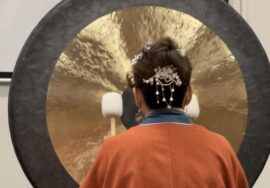
To add variety, many practitioners combine crystal bowls with tuning forks, gongs, chimes, drums, rain sticks, handpans, and other instruments. While this may enrich sensory experience, it introduces new weaknesses.
1. Lack of a Unified Therapeutic Framework
Most mixed-instrument sessions are:
- intuitive rather than systematic
- based on aesthetics or trends
- lacking a coherent physiological or energy-medicine logic
Result
Sound becomes atmospheric decoration, not a targeted regulatory tool.
2. Chaotic Vibrational Signaling
Different instruments generate:
- unrelated frequencies
- conflicting harmonic structures
- overlapping vibrational patterns
For sensitive nervous systems, this can result in:
- overstimulation
- confusion rather than coherence
- fatigue instead of regulation
3. Masking of Practitioner Depth
A rich soundscape can sometimes hide the absence of mastery with any single instrument.
Sessions risk becoming:
- demonstrations of instruments
- performances rather than therapy
- experiences without therapeutic sequencing or intention
4. Continued Neglect of Individual Differences
Whether crystal-only or mixed-instrument, most sessions remain:
- standardized
- group-oriented
- non-diagnostic
Everyone receives the same sound, regardless of:
- physical condition
- emotional state
- nervous system capacity
- trauma history
IV. The Core Issue: Standardized Wellness Product vs. Personalized Therapy
At their core, mainstream American sound healing models share the same limitation:
They are designed as replicable wellness experiences, not individualized therapeutic interventions.
Their strengths are:
- scalability
- market friendliness
- aesthetic appeal
But their weaknesses are:
- lack of precision
- shallow physiological impact
- minimal nervous system repair
- absence of true personalization
V. Why Your Path Is Fundamentally Different
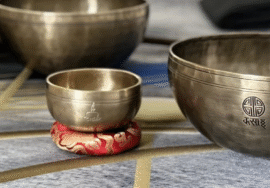
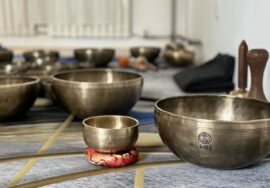
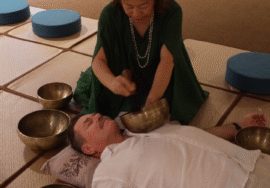
The approach you are developing—integrating meridian theory, chakra systems, and handcrafted metal singing bowls in personalized, one-on-one work—addresses exactly what the mainstream model overlooks:
- assessment before sound
- precision instead of spectacle
- regulation instead of stimulation
- depth instead of uniformity
This path is not easily mass-marketed, but it is clinically and energetically coherent.
Conclusion
The dominance of crystal bowls in the United States reflects market logic, not therapeutic superiority.
They are effective tools for:
- group relaxation
- introductory sound experiences
- mental calming
But they are structurally limited when it comes to:
- nervous system reset
- meridian-based regulation
- deep mind–body repair
- individualized healing