Can sound healing improve sleep?
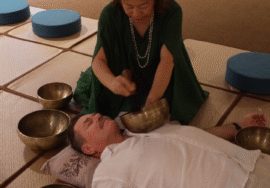
Singing bowl therapy—often using Himalayan —is considered beneficial for sleep because it influences both the nervous system and brainwave activity in ways that support deep relaxation and physiological downshifting. The benefits can be understood across four primary mechanisms.
1. Nervous System Regulation (Parasympathetic Activation)
The sustained, resonant tones produced by singing bowls stimulate the parasympathetic nervous system—the “rest and digest” response. This counters the sympathetic (“fight or flight”) dominance that commonly underlies insomnia, nighttime anxiety, and difficulty staying asleep.
Physiological effects often observed include:
- Lowered heart rate
- Reduced muscle tension
- Decreased cortisol (stress hormone) activity
- Slower, deeper breathing
When the body exits a state of hypervigilance, sleep onset becomes more accessible and uninterrupted sleep more likely.
2. Brainwave Entrainment and Sleep States
Singing bowls emit complex harmonic frequencies that can encourage brainwave entrainment—a process where brainwaves synchronize with external rhythmic stimuli.
- Alpha waves (8–12 Hz): Associated with calm alertness and the transition into sleep
- Theta waves (4–8 Hz): Linked to light sleep, deep meditation, and hypnagogic states
- Delta waves (0.5–4 Hz): Present in deep, restorative sleep
While bowls do not “force” these states, their steady vibrational patterns help guide the brain away from beta-dominant thinking (mental chatter, rumination) toward slower rhythms conducive to sleep.
3. Somatic Relaxation Through Vibration
When bowls are played in proximity to the body, their low-frequency vibrations are felt physically, not just heard. This vibrational input can:
- Release stored muscular and fascial tension
- Improve circulation and lymphatic flow
- Promote a sense of grounding and bodily safety
For individuals who struggle to sleep due to restlessness or somatic stress, this physical settling is often as important as mental calm.
4. Reduction of Cognitive Noise and Mental Overactivity
Many sleep disturbances are driven by an inability to “switch off” the mind. Singing bowl tones provide a gentle, non-verbal focal point that:
- Interrupts repetitive thought loops
- Shifts attention away from problem-solving and anticipation
- Encourages a meditative, present-moment awareness
Unlike guided meditation or spoken audio, the non-linguistic nature of sound bypasses analytical processing, making it easier for the mind to disengage.
Why It Can Be Especially Effective for Chronic Sleep Issues
For individuals with:
- Stress-related insomnia
- Burnout or nervous system overload
- Difficulty staying asleep or waking unrested
Singing bowl therapy addresses the root physiological state, not just symptoms. It supports sleep by teaching the body how to return to a baseline of safety and coherence, which can have cumulative benefits over time.
Important Note
Singing bowl therapy is complementary, not a replacement for medical treatment. However, when used consistently—especially in the evening or as part of a wind-down ritual—it can significantly improve sleep quality, depth, and recovery.