
You’ve Experienced a Sound Bath—But You’re Still Hungry for Deeper Transformation
Many people attend sound baths, lie back, close their eyes, and feel the waves of vibration wash over them. Muscles relax. Breathing slows. Thoughts quiet. It is soothing, restorative, even enjoyable.
And yet… for some, this experience can leave a lingering curiosity: “I feel calm, but I want more. I want something deeper.”
1. Relaxation vs. Resonance
Sound baths often provide relaxation, which is valuable. Slowing the nervous system, releasing muscular tension, and entering a meditative state are all powerful effects. But relaxation alone is not always transformation.
Transformation is relational. It happens when sound interacts with the body, nervous system, environment, and practitioner in a way that engages depth, presence, and subtle awareness. It is not just the instrument producing vibration—it is the field created between practitioner, instrument, room, and listener.
Many sound bath experiences focus on the surface layer: pleasant tones, visual aesthetics, or musical rhythm. This is calming, but it may not invite the nervous system to explore deeper release, self-regulation, or embodied awareness.
2. Depth Comes from Invitation, Not Instruction
Deeper transformation is rarely about louder sound, faster rhythms, or higher frequencies. It comes from invitation, presence, and responsive resonance.
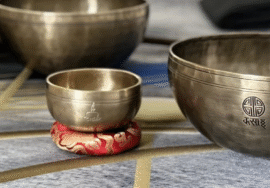
High-purity seven-metal Kasa Full Moon Bowls provide layered, slow-decaying harmonics that do not demand focus or action. The vibration moves through tissues, fluids, fascia, and bone, giving the body a chance to integrate sensation on its own terms. The nervous system is gently encouraged to soften, reorganize, and follow the rhythm of its own intelligence.
In this way, transformation unfolds naturally—because the body feels safe enough to release, the mind feels invited to witness, and the sound itself becomes a living container for change.
3. The Practitioner Matters
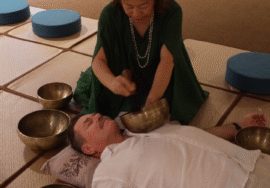
Sound is not a solo act. The practitioner is part of the field. How they hold presence, pace, and attention affects the depth of the experience. A skilled practitioner can tune the session to the room, the participants, and the subtle shifts in energy, creating an environment where transformation is possible, rather than just relaxation.
4. Transformation Is a Process, Not a Moment
Deeper sound work is cumulative. You may not feel dramatic shifts in a single session—but over time, the nervous system learns to recognize safety, resonance, and presence. Emotional, mental, and somatic patterns begin to reorganize, not because of force or instruction, but because the body has space to do so.
Sound baths can feel ephemeral, enjoyable, and comforting. Deeper transformation requires intentionality, presence, and instruments that invite the body fully into resonance, rather than simply entertaining or relaxing it.
5. Moving Beyond Calm
If you’ve experienced sound baths and feel “ready for more,” it is not dissatisfaction—it is curiosity. Your body and nervous system are asking for a deeper field of resonance, a longer invitation, and instruments that meet you where you are.
This is why high-purity, handcrafted Kasa Full Moon Bowls exist: to create immersive, multi-layered, responsive sound experiences that go beyond surface calm into embodied transformation.
Relaxation is wonderful. But when the sound surrounds, integrates, and adapts to your system, transformation can unfold. That is the next level—the depth that calls to those who have already experienced calm but hunger for true resonance.