Crystal Singing Bowls VS Tibetan Singing Bowls: Differences between the modern and traditional sound healing instruments.
Sound healing instruments may look similar at first glance, but the way they are made, how they sound, and how the body responds to them can be profoundly different. Two of the most widely used instruments today are Crystal Singing Bowls and Tibetan (Himalayan) Singing Bowls.
While both are used in sound healing, meditation, and wellness settings, they come from very different traditions and support very different therapeutic intentions.
This article explores their origins, sound qualities, effects on the body and mind, and why practitioners choose one over the other.
Origins: Modern Innovation vs. Ancient Tradition
Crystal Singing Bowls
Crystal singing bowls are a modern invention, typically made from quartz crystal. They began appearing in sound healing practices primarily in the late 20th century, influenced by New Age spirituality and contemporary sound research.
They are often:
- Factory-produced
- Tuned to specific musical notes
- Marketed with chakra or frequency associations
Their design emphasizes precision, clarity, and consistency.
Tibetan Singing Bowls
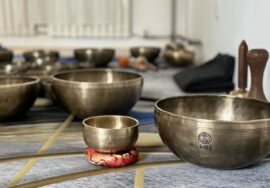
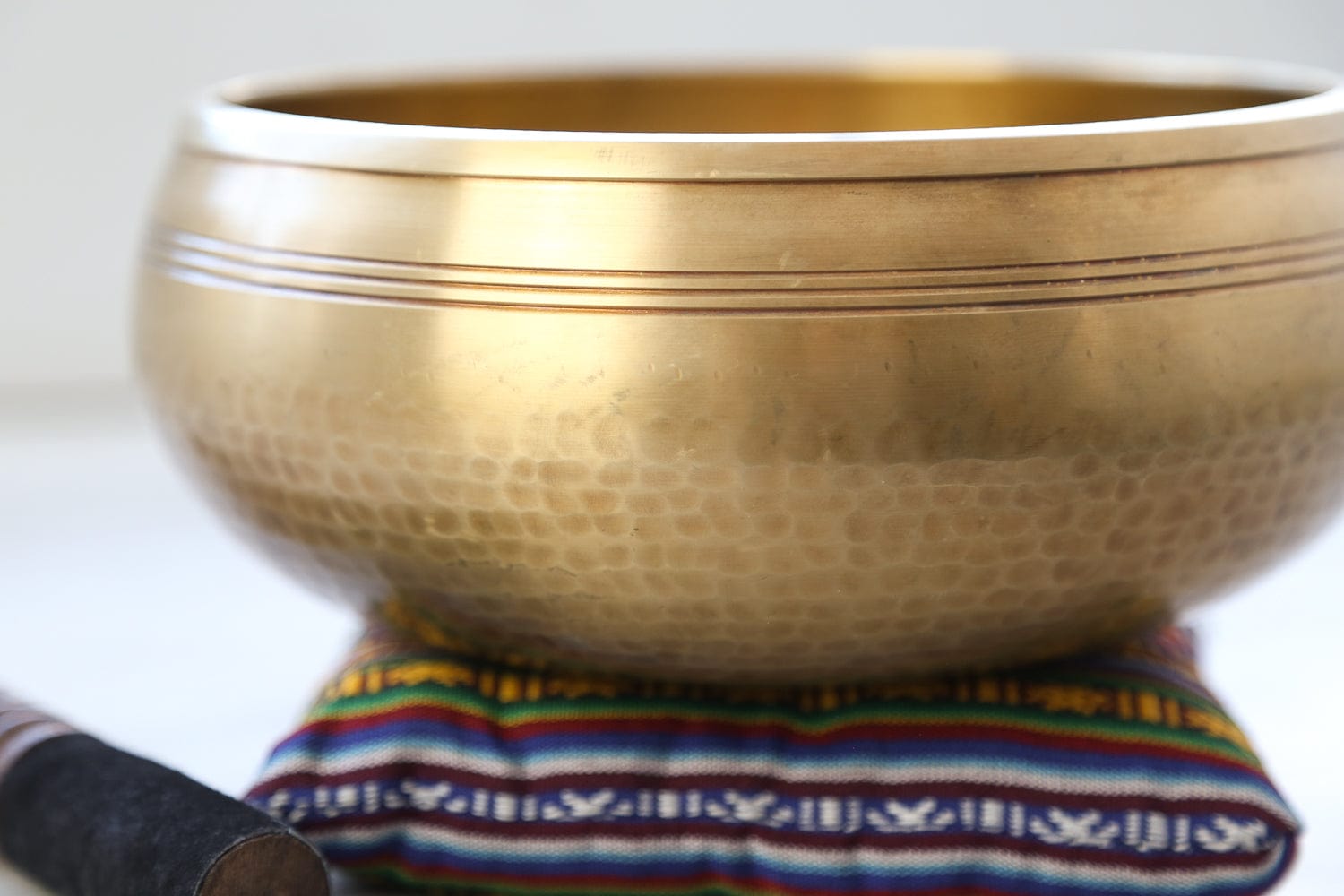
Tibetan singing bowls—more accurately referred to as Himalayan or Nepali singing bowls—have a history spanning hundreds of years. Traditionally handcrafted in Nepal by skilled artisans, these bowls were originally used as household utensils before their sonic qualities were recognized for meditation, ritual, and healing.
Authentic Tibetan bowls are:
- Hand-hammered
- Made from copper-based alloys (often multiple metals)
- Individually shaped and tuned by ear and touch
Each bowl carries the imprint of the artisan’s hand and lineage.
Sound Structure: Pure Tone vs. Complex Overtones
Crystal Singing Bowls
Crystal bowls produce a single, pure, and penetrating tone. Their sound is clear, bright, and strong, with minimal overtone layering.
Sound qualities:
- Highly focused pitch
- Strong projection
- Immediate sensory impact
This purity can feel expansive or energizing, especially in large spaces.
Tibetan Singing Bowls
Tibetan singing bowls create rich, layered overtones rather than one dominant pitch. The sound evolves over time, allowing the body to receive vibration gradually.
Sound qualities:
- Complex harmonic layers
- Long, warm resonance
- Felt throughout the body, not just heard
This complexity allows different tissues, emotions, and nervous system layers to respond naturally.
Effects on the Body and Nervous System
Crystal Singing Bowls: Activation and Clarity
Crystal bowls tend to:
- Draw awareness upward toward the head
- Increase alertness and sensory stimulation
- Create strong energetic sensations
For some people, this feels uplifting or expansive. For others—especially those who are anxious, sensitive, or fatigued—it can feel overstimulating or overwhelming.
They are often used for:
- Intention-setting
- Energizing practices
- Short, focused meditative sessions
Tibetan Singing Bowls: Regulation and Restoration
Tibetan singing bowls tend to:
- Ground awareness into the body
- Support nervous system regulation
- Encourage deep relaxation and breath expansion
Their vibration moves through fascia, organs, and connective tissue, often producing a sense of warmth, softening, or emotional release.
They are commonly used for:
- Stress and anxiety support
- Trauma-sensitive work
- Restorative sound therapy
- Long-form meditation and healing sessions
Craftsmanship and Energetic Integrity
Crystal Bowls
- Industrially manufactured
- Consistent size, weight, and pitch
- Minimal variation between bowls
While visually striking, crystal bowls lack the organic variability that many practitioners associate with embodied healing.
Tibetan Singing Bowls
- Individually hand-hammered
- Slightly asymmetrical and unique
- Carry generational artisan knowledge
Bowls such as Kasa Full Moon Singing Bowls, made under specific lunar timing using traditional methods, are especially valued for their depth, adaptability, and cultural lineage.
Therapeutic Suitability: One Size Does Not Fit All
| Aspect | Crystal Singing Bowls | Tibetan Singing Bowls |
|---|---|---|
| Origin | Modern, industrial | Ancient, handcrafted |
| Sound | Pure, focused | Layered, harmonic |
| Nervous system | Activating | Regulating |
| Body sensation | Head-focused | Full-body |
| Best for | Clarity, energy | Restoration, grounding |
| Sensitivity-friendly | Sometimes | Yes |
| Cultural lineage | Limited | Deep and historical |
Why Many Practitioners Prefer Tibetan Singing Bowls for Healing
In therapeutic and wellness contexts, especially where:
- Nervous system regulation is needed
- Emotional sensitivity is present
- Long-term well-being is the goal
Tibetan singing bowls are often preferred because they support integration rather than stimulation.
Their sound does not push the body into a state—it allows the body to arrive there naturally.
In Summary
Both crystal singing bowls and Tibetan singing bowls have a place in sound practice, but they serve different purposes:
- Crystal singing bowls are modern instruments that emphasize clarity, activation, and precision.
- Tibetan singing bowls are traditional instruments that emphasize depth, grounding, and whole-body resonance.
For restorative sound therapy, nervous system health, and embodied healing, traditional Tibetan singing bowls—especially authentic hand-hammered and Kasa Full Moon bowls—offer a gentler, more sustainable path.
Sound healing is not about louder or purer sound.
It is about choosing the sound that the body can truly receive.